
by Me | Sep 16, 2018 | Food & Diet, Weight Loss Surgery Research
I’ve been doing a lot of research into the effectiveness of Weight Loss Surgery – and in particular, the long term benefits it has to offer. All the data I have encountered (Swedish Obesity Study, US Veterans Study) highlights the significant advantages of weight loss surgery over traditional weight loss strategies (diet, exercise, counselling, support). It is largely this data which convinced me that the risk of not doing anything was much higher than the risk of the surgical option.
But I started to wonder what type of research there was about the long term effects of non-surgical weight loss strategies.
The Biggest Loser
 The Biggest Loser was (once) a very popular reality TV program which followed the progress of severely obese contestants to see who could lose the most weight (for a significant prize). It started out in the USA in 2004 and ran for 17 seasons over a 12 year period. The show came to Australia in 2006 and ran for 11 seasons to 2017.
This program provides a very public glimpse into spectacular weight loss results achieved in a relatively short period, by very motivated people with lots of support, assistance and motivation. It demonstrates that massive weight loss can certainly be achieved in the short term, but offers no indication as to the long term benefits of this type of weight loss regime… In fact when you look into it a little deeper any information about long term results is noticeable by its absence. Apart form a few “guest appearences” from past contestants (usually from the previous season), there is next to no mention of how the rest are getting on.
In 2016, a study published in Obesity Journal examined the current situation of 14 contestants, 6 years after they appeared as contestants on The Biggest Loser. The focus of this study was primarily to look at long term changes in their metabolic rate.
Researchers studied 14 contestants who participated in the 30-week competition, which involves intensive diet and exercise training. They started at an average weight of 149 kg and ended at an average weight of 91 kg. Six years later, when the six men and eight women went to the National Institutes of Health for follow-up measurements :
- weight, on average, was back up to 131 kg. Only one participant hadn’t regained any weight.
- percent body fat started at an average of 49 percent, dipped to 28 percent and returned to 45 percent over time.
All but one subject regained some of the weight lost during the competition and five subjects were within 1% of their original weight or above. On average, the group regained much of their weight but did maintain about 12 percent weight loss even after six years, had better cholesterol profiles, and none had developed diabetes during follow-up.
Summary
While most subjects experienced substantial weight regain in the 6 years since “The Biggest Loser” competition, the mean weight loss was 11.9% compared with their original baseline weight and 57% of the participants maintained at least 10% weight loss. In comparison :
- 20% of overweight individuals maintain at least 10% weight loss after 1 year of a weight loss program (Wing RR, Phelan S. Long-term weight loss maintenance. Am J Clin Nutr 2005;82:222S-225S.).
- 37% of the lifestyle intervention arm of the Diabetes Prevention Program maintained at least 7% weight loss after 3 years (Wing RR, Hamman RF, Bray GA, et al. Achieving weight and activity goals among diabetes prevention program lifestyle participants. Obes Res 2004;12:1426-1434.),
- 27% of the intensive lifestyle intervention arm of the Look AHEAD trial maintained 10% weight loss after 8 years (Look ARG. Eight-year weight losses with an intensive lifestyle intervention: the look AHEAD study. Obesity (Silver Spring) 2014;22:5-13.).
Conclusion
The 2016 study found that only one of the 14 Biggest Loser contestants examined weighed less than when the competition completed, with four of them now heavier than their starting weight, and nine returning to within 10% of their previous weights. Whereas according to the Journal of Obesity outcomes for patients undergoing gastric bypass surgery are far superior, with patients losing 60-70 per cent of excess weight after a year with approximately 50 per cent of this access weight loss maintained after 15 years.
by Me | Sep 13, 2018 | Diabetes, Pre-Surgery
I was first diagnosed with Type II Diabetes several years ago… and since then have been on a cocktail of different medications (and more recently injections) to get my blood sugar under control.
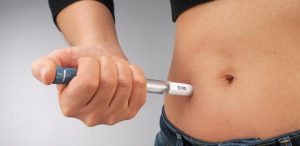 Initially this was a single daily tablets, but over the years has expanded (as the Diabetes “took hold”) to include Insulin injections and also high blood pressure medication.
just a month ago, I was on 4 different tablets (taken at morning and night) and 7 daily injections of three different Insulin medications (3 in the morning and evening and 1 midday). I was also doing regular (3 or 4 times a day) Blood Prick tests to monitor my blood glucose levels. With all these medications I finally had my blood sugar “under control” but it was still too high… and was only going to get worse with time if I didn’t change something.
I thought I was already eating “pretty well”, but 9 weeks ago, I lost my sense of taste… and as a result… lost interest in food… and also appetite. As a consequence I significantly cut down on what I was eating, and “accidentally” lost 10Kg in 9 weeks.
 My blood sugar levels plummeted, and I found I had to reduce my Diabetes meds and actually make myself eat more than I really felt like eating – just to get my blood sugar above 4 (I am not allowed to drive with a blood sugar less than 5). In the last week I have also started my pre-surgery OptiFAST VLCD Meal Replacement Diet, so my blood sugar continued down and now – 1 week BEFORE my weight loss surgery, I have reduced my Diabetes AND Blood Sugar medications to 2 tablets and 1 injection each evening… and my blood glucose readings haven’t been this good in years.
Following surgery I expect to very quickly stop all diabetes/blood pressure medication all together 🙂
I was actually quite shocked over how much difference a very well controlled diet (in my case encouraged by loss of taste) had on my weight and diabetes… I had to start wondering if weight loss surgery is actually necessary, but I am positive that even though I have had great, fast term results, I wouldn’t be able to maintain it, and once my taste returned (it seems to be improving now) I would very quickly slip back into bad habits and my weight/diabetes issues would return.
This is very much supported by research on the long term benefits of weight loss, major studies such as the Swedish Obesity Study and the US Veterans Study show very strong long term benefits of Bariatric Surgery when compared with “traditional” weight loss strategies (diet, exercise, counselling)

by Me | Sep 12, 2018 | Pre-Surgery
Having a gastric bypass can be a life-changing event. This type of surgery is permanent and irreversible so it is good to be fully prepared for surgery both physically and mentally. Ensuring you are fully prepared and ready for the life changes that are about to occur can make recovery and healing much easier, and can also drastically help with the transition into your new lifestyle and eating habits.
My Gastric Bypass Surgery is scheduled in 8 days, and I have done some research into what to expect and how best to prepare for it. I have collated below some tips and suggestions on preparing for gastric Bypass Surgery that I have gleaned from the web… and after the surgery, I may revist this topic to see how well they actually helped to prepare me for the procedure :
1. Pack loose and comfortable clothing for the hospital. It could be difficult to move and bend your body after the surgery so make sure you have clothes that are easy to get into and will not iritate things such as stitches or staples that you may have in your abdomen. Also, Make sure there are extra clothes for your home as well. This means ensuring that your wardrobe is as comfortable for home as it was in the hospital. This can also mean purchasing proper, loose-fitting business clothes if you are planning on returning to work within a short period.
2. Ensure you have shoes that can easily slip on. Slip on shoes will be much easier than having to bend down and have to Velcro or tie shoes.
3. Try to have some “transition” clothing, shoes, etc. These items are usually old clothing that you can no longer fit into but will be perfect as you lose weight. You will start to lose weight dramatically and it is more cost effective to have some older clothing ready than buying new clothes. If you do need to buy new clothes then try charity stores for cheaper alternatives. Only start to buy new clothes once you have stopped losing weight at such a dramatic rate.
4. Purchase multivitamins. It is difficult to get nutrition directly after surgery and multivitamins help immensely. Your dietician will be able to tell you which vitamins you will require to meet your specific needs.
5. Have over-the-counter pain medication on hand. After the prescribed pain medication has run out it is prudent to have regular strength medication, such as Tylenol avaiable if necessary.
6.  Stop smoking. Smoking can lead to post-op complications and surgeons may refuse to operate if you still have nicotine in your system. You will normally need to stop smoking 2-4 weeks before surgery.
7. Have someone ready to help you out around the house for the first week or two. You may need someone for physical support and/or to do things around the house such as light cleaning, laundry, etc.
8. Make a list of things you will need for the first few weeks. This will include clear liquids, clear soups, small food containers that are perfect for your new, smaller portions, and protein powder. Make some post-op friendly meals and freeze them into small portions. Remember that they must be high in protein and nutritional value but very low in fat and sugar.
9. Get proper nutrition before surgery. Ensure your body is ready for the surgery and the recovery phase — Eat a proper and varied diet will lots of protein and vegetables. This will help get your body in the best possible shape before having gastric bypass surgery.
10. Read up on the surgery. Make sure you are well educated on your procedure and know what to expect. Talk to others who have already had a gastric bypass and join a support group. Online support groups, such as RealSelf, can provide support, expert knowledge and anonymity.
by Me | Sep 10, 2018 | Food & Diet
Ketosis is a natural state for the body, when it is almost completely fueled by fat. This is normal during fasting, or when on a strict low-carb diet.
Ketosis has many potential benefits – related to rapid weight loss, health or performance – but there are also side effects. In type 1 diabetes and certain other rare situations excessive ketosis can even become dangerous.
There are many benefits of ketosis. By giving your body and brain an almost unlimited supply of energy, you can increase your mental and physical endurance. It also reduces hunger, facilitating effortless weight loss. Furthermore, as getting into ketosis requires eating very few carbs, it can effectively reverse type 2 diabetes.

One way to enter the state of ketosis is to eat a ketogenic diet. Another is to do a period of fasting. Under these circumstances, as soon as the body’s limited reserves of glucose starts to run out, your entire body switches its fuel supply to run almost completely on fat. The levels of the fat-storing hormone insulin levels become very low, and fat burning increases dramatically. You thus get easy access your fat stores, and can burn them off. This is great for losing excess weight. Studies prove that keto diets result in more weight loss, faster.
Side effects
When starting a low-carb ketogenic diet and reaching ketosis it’s common to get some side effects during the first week. Possibilities include headache, lethargy, irritability, leg cramps, constipation and heart palpitations.

by Me | Sep 10, 2018 | Food & Diet
Day 5 of my Meal replacement Diet prior to surgery… and still going OK…

I find that I am not hungry at all in the mornings (which is not that unusual for me anyway) so rather than forcing myself to eat breakfast when I don’t really feel like it (and yes… I do know it is “the most important meal of the day)) I have decided to incorporate the 16:8 Diet – which involves only eating within an 8 hr period each day – and then fasting for the remaining 16. This sounds pretty nasty, but actually works in pretty well with my eating patterns anyway…. I am now only eating between Midday and 8PM – which is not too bad …
Now I know that the idea for the OptiFAST VLCD is to reach “
Ketosis“… and I am not really sure if/how 16:8 may impact on that… but I have so far lost another 2KG in the last 5 days… so can that be a bad thing ??